 ZARZA We are Zarza, the prestigious firm behind major projects in information technology.
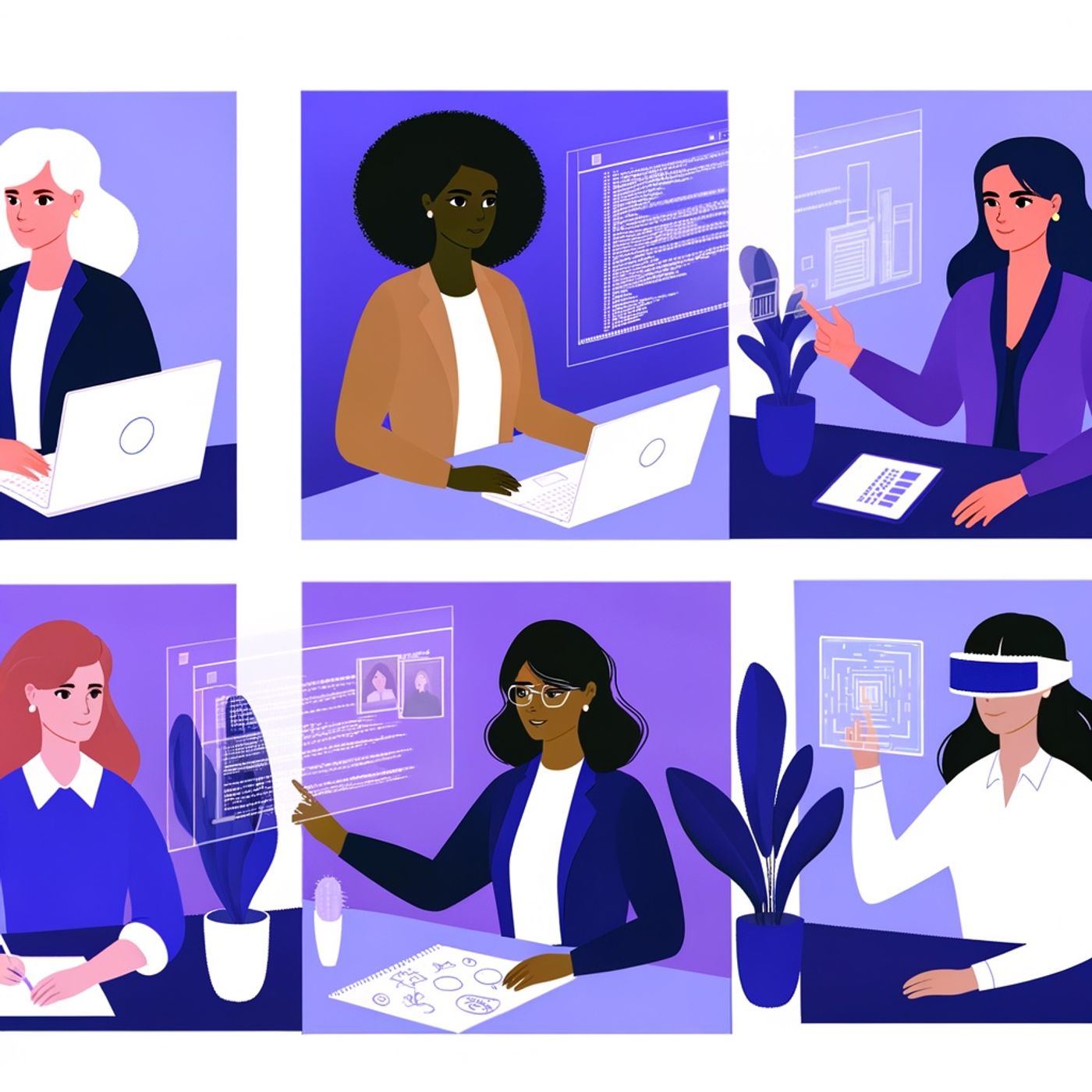
Listen "Decoding the Tech Landscape: Women Navigating Bias, Burnout, and Breakthroughs"
Episode Synopsis
This is your Women in Business podcast.Welcome to Women in Business. Today we’re exploring how women are navigating the current economic landscape in tech—a sector that's both an engine of innovation and a battleground for gender equity. There’s no denying that progress is happening; women now hold about 35 percent of tech jobs in the United States, a sharp leap from just nine percent in the early 2000s, according to the WomenTech Network. But despite this momentum, the tech world remains male-dominated, especially at the highest ranks. Companies like Amazon, Apple, and Google employ significantly fewer women in leadership, with only about 30 percent of those roles filled by women.Economic shifts, global events, and changing workplace expectations have all shaped the tech landscape—and women are feeling these changes keenly. For instance, the recent waves of layoffs have hit female tech professionals disproportionately. When the pandemic forced companies to pivot, remote work appeared to level the playing field, giving women more flexibility. Yet, burnout soared, and the number of women in tech actually dropped during the hardest pandemic years before rebounding only recently.Let’s talk about representation. According to CompTIA and recent studies, women make up only 21 percent of software developers in the US, but are better represented in roles like data science, where they account for nearly half. And across all major tech companies, even where women have made inroads as employees, there’s still a striking leadership gap. Facebook reports that only a third of its managers are women, and it’s even fewer at Google and Microsoft. The McKinsey & Company report notes that for every 100 men promoted to a managerial role, just 87 women—and only 82 women of color—move up, reinforcing a persistent pipeline problem.Diversity in education is another cornerstone to consider. The National Science Foundation shows that while women account for over a third of bachelor’s graduates in economics and almost 40 percent in physical sciences, only about 21 percent of those earning a computer science degree are women. This underrepresentation starts in the classroom and echoes throughout the workplace: limited access to mentorship, pervasive gender bias, and lack of networking opportunities all compound over time. 72 percent of women say they’ve experienced bias affecting promotion, and more than half face discrimination or harassment hindering their growth.But there are bright spots—and strategies that work. Emerging tech hubs like Little Rock, Arkansas, are seeing major gains in female tech earnings and diversity, suggesting that opportunity isn’t limited to Silicon Valley anymore. And advice from networks like WomenTech reminds us all: never underestimate the power of women advocating for one another. Supportive communities, transparent promotion policies, and mentorship can change the landscape for the next generation.So, as you reflect on today’s discussion, consider these key points: workplace representation and leadership gaps, the impact of economic trends like layoffs and remote work, the ongoing education pipeline challenges, the importance of mentorship and advocacy, and how geographic location is reshaping opportunity. To every listener out there—whether you’re a student, a company leader, or an entrepreneur—your voice and determination continue to drive tech forward.Thank you for tuning in—don’t forget to subscribe to Women in Business wherever you get your podcasts. This has been a Quiet Please Production, for more check out quiet please dot ai.For more http://www.quietplease.aiGet the best deals https://amzn.to/3ODvOtaThis content was created in partnership and with the help of Artificial Intelligence AI
 In God we trust