 ZARZA We are Zarza, the prestigious firm behind major projects in information technology.
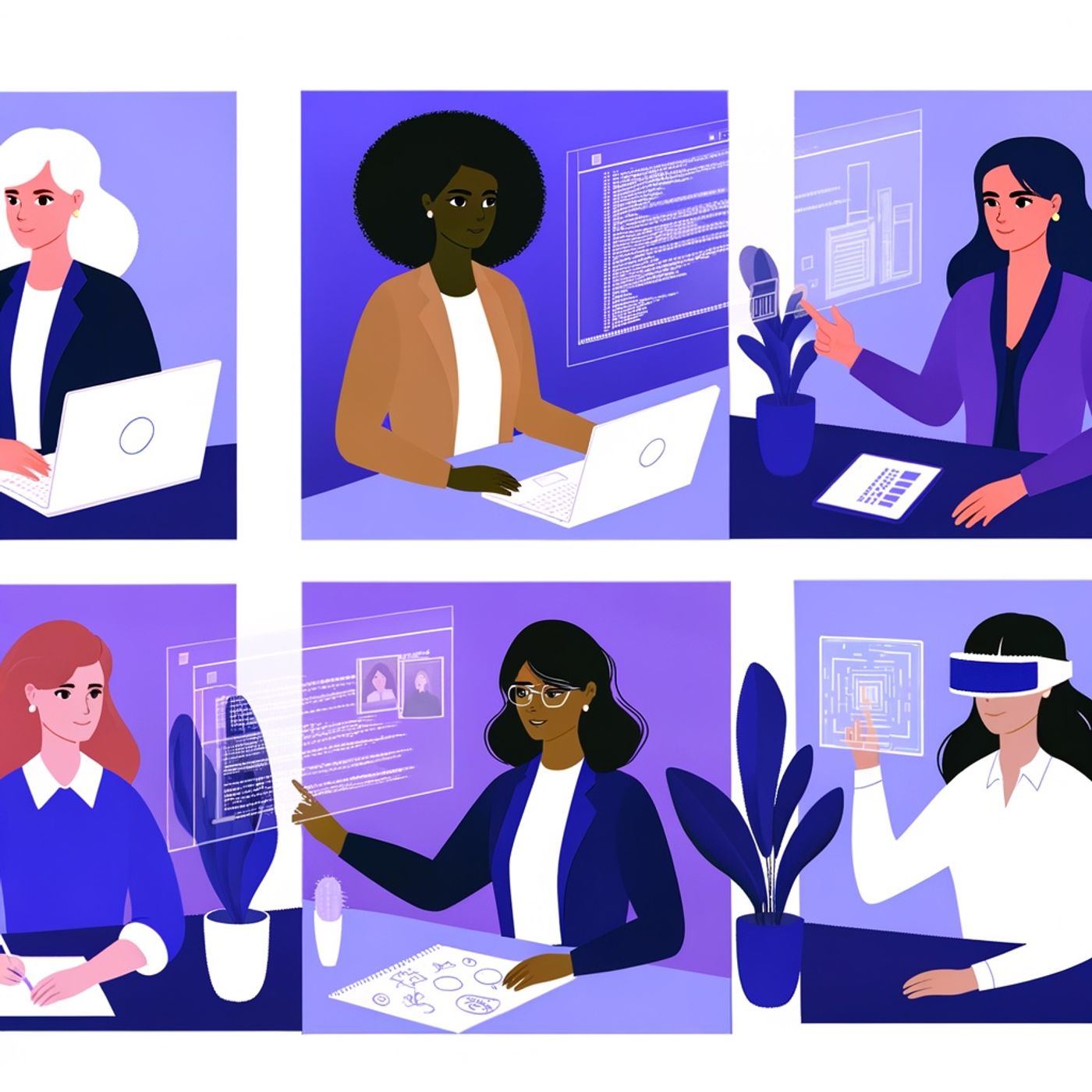
Listen "Tech's Shifting Power: Women Redefining the Game"
Episode Synopsis
This is your Women in Business podcast.You’re listening to Women in Business, and today we’re diving straight into what it really means to be a woman navigating the tech industry in this economic moment.Let’s start with the landscape. According to CompTIA’s State of the Tech Workforce and research summarized by AIPRM and Exploding Topics, women hold only about a quarter of tech roles in the United States, roughly 26 to 27 percent, even though women are nearly half of the overall workforce. Deloitte and the WomenTech Network report similar patterns globally. That means when you walk into most engineering floors at companies like Google, Apple, Meta, Amazon, or Microsoft, you are still likely one of the few women in the room. Yet demand for tech talent is growing, AI is reshaping every industry, and the women who stay in the game right now are positioning themselves for enormous leverage.That brings us to the first key discussion point: resilience and strategy in a shifting economy. The World Economic Forum and McKinsey have both pointed out that digital skills and AI fluency are becoming non‑negotiable for high‑earning roles. At the same time, women are still less likely to work in core technical positions and less likely to use advanced AI tools every day. The opportunity here is not just to learn to code or prompt an AI model, but to deliberately choose upskilling that moves you into revenue‑driving, decision‑making positions: data science, product management, cybersecurity, and AI governance.Our second point is the leadership and pay gap, and why this economic moment is a chance to renegotiate power. Reports from McKinsey’s Women in the Workplace series and the National Science Foundation show that women are significantly underrepresented in senior tech leadership and still earn less than men in similar roles. Yet companies facing talent shortages are increasingly willing to adjust compensation, offer flexible work, and fast‑track promotion for people who can deliver. That means when you walk into a performance review at a company in San Francisco, Austin, London, or Bangalore, you are not just asking for a raise; you are negotiating from a position of market scarcity and proven impact.Third, let’s talk about funding and entrepreneurship. PitchBook and Crunchbase have repeatedly shown that women‑founded startups receive only a small fraction of global venture capital, often hovering in the low single digits of total funding. But here’s the twist: multiple analyses show that diverse founding teams often outperform on return. That gap between results and investment is a structural inefficiency in the market. For women building startups in fintech, health tech, climate tech, and AI, especially in hubs like New York, Berlin, Nairobi, and Singapore, the current economic reset is an opening to seek out women‑focused funds, angel syndicates, and revenue‑first models that reduce dependence on traditional venture gatekeepers.Fourth, we have the power of networks and mentorship. Surveys by organizations like Women in Tech Network and Women in Digital show that women with strong professional networks and sponsors are more likely to stay in tech, move into leadership, and weather layoffs. In a volatile economy, your network is not a nice‑to‑have; it is a risk‑management strategy. That could mean joining an ERG inside Microsoft, a Women Who Code chapter in Toronto, or a Slack community for women founders in Lagos. Every connection is a potential collaborator, reference, or co‑founder.Finally, mental health and sustainable ambition. Studies cited by Deloitte and StrongDM note that women in tech report higher levels of burnout, in part because they are often carrying both the emotional labor of being “the only one” and the pressure to outperform to be seen as equal. In a cost‑of‑living crisis and a fast‑moving tech economy, sustainable success means defining your own metrics: not just title and salary, but autonomy, alignment with values, and room to rest and think. Remote and hybrid work, flexible schedules, and portfolio careers are no longer fringe; they are strategic tools for women who want both impact and longevity.To every listener building a career or company in tech: this economic landscape is challenging, but it is also a moment of re‑design. The systems are not fixed. You are not an exception trying to squeeze into a mold; you are part of the group that is shaping what comes next.Thank you for tuning in to Women in Business. Be sure to subscribe so you never miss an episode. This has been a Quiet Please production, for more check out quietplease dot ai.For more http://www.quietplease.aiGet the best deals https://amzn.to/3ODvOtaThis content was created in partnership and with the help of Artificial Intelligence AI
 In God we trust