 ZARZA We are Zarza, the prestigious firm behind major projects in information technology.
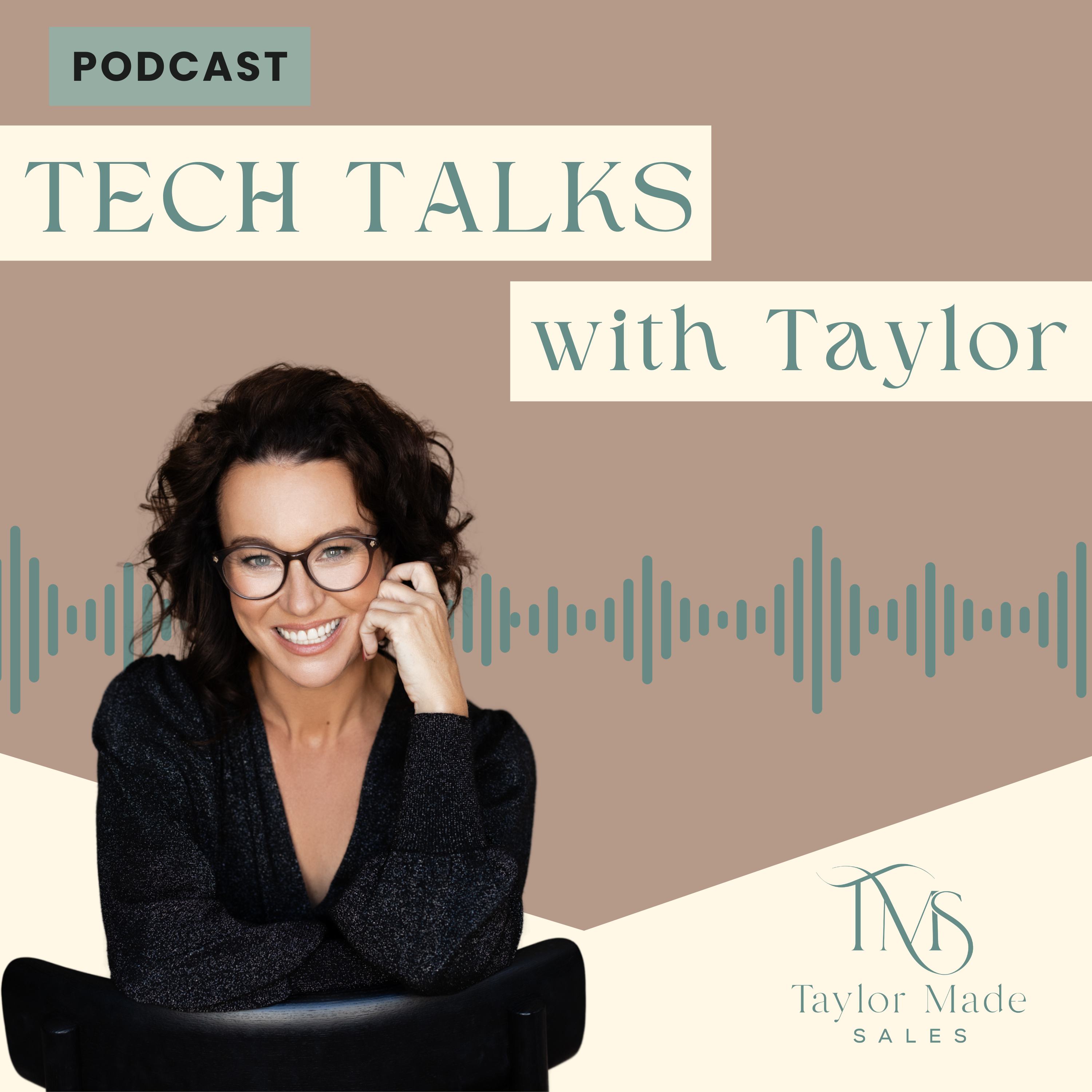
Listen "E1: Let's talk Back Ups with Druva"
Episode Synopsis
In this episode, I'm thrilled to be joined by Farhan Hudda from Druva—a leading global SaaS backup solution. Druva is designed to help businesses secure and protect their data in the cloud, providing reliable, scalable, and hassle-free backup and recovery. With cyber incidents on the rise, having a solid backup solution is no longer optional—it's essential. We'll discuss how Druva safeguards your data, why a cloud-native approach is a game-changer, and how businesses can mitigate risks while maintaining productivity. Stay tuned as we dive into the tech that every business needs to stay resilient! Welcome to Tech Talks with Taylor, the podcast where we explore how the right technology can create better business outcomes, everytime. I'm Leanne Taylor, founder of Taylor Made Sales, and I'm passionate about helping Australian businesses connect with the tech solutions that drive success. For more details contact [email protected] or visit www.taylormadesales.com.au Full Episode Transcript: Leanne Taylor: Welcome to Tech Talks with Taylor. I'm Leanne Taylor, your host of 10 minute Tech talks, where we cut straight to the heart of tech for Australian businesses. In each session we'll spend only 10 minutes with an industry expert, unpacking the latest products, services, and solutions to help your business achieve great technical outcomes. Let's get started. Leanne Taylor: Hi everyone, it's Leanne Taylor here and I'm super excited today to be talking to you about all things backup with Druva. And we've got Farhan Hudda joining us today. Welcome Farhan Hudda. Farhan Hudda: Thanks Leanne. Thanks, thanks for having me on. Leanne Taylor: My pleasure. Now, talk to us about backups because there's obviously lots of things going on in that space and one thing that I absolutely love about working with you at Druva is that you guys are 100% cloud. So talk us through who you are and what you do and how you do it. Farhan Hudda: Yeah, absolutely. So, um, I mean backup, backup and recovery, uh, is, uh, not a new, uh, tool in the, in the IT, uh, sort of vertical. It's been going on for about 30 years. Uh, I think predominantly the challenges, uh, that backup, uh, softwares were solving, uh, were mainly around availability risk, right? So hardware failure, application failure. Uh, more recently, uh, threats like, uh, user risks or compliance risks or more importantly ransomware, uh, you know, has been, uh, more and more the reason why backup tools are being used. And that's kind of where, um, we sort of set ourselves apart. We can certainly make sure, uh, that we can solve customers' availability risks around hardware and application failure, but where we really set ourselves apart is, uh, when the customer has to recover from a ransomware attack, uh, or a insider exploitation attack, uh, you know, Druva will be, uh, a very, very good tool. So I'll take a step back here as well. uh, and sort of cover uh what Druva is, probably a name, um, you know, many businesses and organisations in Australia have not been familiar with. Uh, but we are a backup and and recovery vendor. Uh we are 100%, um, you know, SAS. So uh, we are built in the cloud, we're built in AWS. Um, customers don't need to have any presence in AWS, uh, to be a customer with Druva. That's just our storage, uh, platform, uh, where the data will be stored. Um, and there's no ingress or egress charges that the customer will have to worry about when we pipe the data, uh, to the Druva cloud, uh, and back to the customer's, um, you know, uh, servers and and um, data centres when they're doing restores. Leanne Taylor: So, tell us about, you know, replacing a lot of customers out there have a lot of on-premise devices and a lot of on-premise solutions. Can you talk us through how they migrate off that or how you're your Druva can provide significant cost savings by having it all in the cloud? Farhan Hudda: Yeah, absolutely. So, um, you know, there's there's really three, um, pathways, uh, or three options the customer has, uh, when they're deciding, uh, to either keep their, uh, you know, backup vendor or look at something, uh, new and exciting. Uh, legacy traditional, uh, software, uh, vendors like Veeam and Commvault, uh, they're mainly on premise, uh, where you would have a storage platform, uh, and a licence that's provided by Commvault or Veeam. Uh, you know, the customer is responsible for making sure, uh, that they design it themselves or they are their service partner will design it for them. Uh, the cost of operations or the total cost of operations can be very, very high, uh, and the risk can be very, very high mainly because the customer is responsible for ongoing maintenance, capacity and performance management, you know, power, cooling, space, where you're keeping, uh, those backups, uh, the network that's required to run your backups, storage, uh, and your server or or virtual machine as well. Second option, uh is a traditional appliance. Uh someone like Cohesity uh or Rubrik uh might offer. Uh most of those challenges uh will sort of still stay the same. Uh the integrated appliance uh you know, you don't have to worry about storage or server but you still have to worry about ongoing maintenance. You know, so that's making sure you're patching everything on time, capacity and performance management again, network. Uh so those challenges will still persist. Uh, a solution like Druva where we're 100% cloud, uh, the customer does not have to worry about any infrastructure or maintenance. You know, we make sure that everything's patched and upgraded in the back end for the customer. Uh, and because we're a SAS solution, it's, it's a consumption based pricing model. So there's never going to be any, uh, concerns around overprovisioning or underprovisioning storage. We can sort of grow with the customer or as their requirements grow. Uh, we have committed, uh, you know, SLAs, so we deliver on those SLAs. Um, so essentially the the biggest thing that I think, uh, customers, uh, are noticing is that we're taking that risk away, right? Uh, the risk of, um, backups, uh, being targeting during a ransomware attack, which is very common practice, you know, that can never happen with Druva. Leanne Taylor: So, tell us about what sort of workloads can customers back up with you guys? Farhan Hudda: Yeah, great question. Um, so we will provide a single pane of glass. There won't be, you know, different or multiple logins that the customer has to uh, sort of log into, uh, to look at their Druva dashboard. We will be able to back up, uh, all of their SAS applications, Microsoft M365, uh, is probably the most common one, uh, that we see, you know, customers use for their email, SharePoint, One drive. Uh, Google Workspace, we can back that up as well. Uh, we can also backup Salesforce. Uh, and then anything else that the customer is running in the data centre, right? So, uh, things like VMware, Hyper-V, uh, any databases, uh, Oracle workloads, um, file servers, Linux servers, anything that you could expect, uh, to be found in a traditional data centre, uh, we can back those up as well. Uh, and where we're seeing, uh, the market move to now is, uh, you know, using platform as a service, uh, in the public cloud. So, you know, customers might have some VMs that they're running in Azure. A customer might have some, uh, EC2 instances that they're running in AWS. Regardless of where that workload is residing, whether it's on premise or whether it's in the cloud, uh, we will be able to back it up, uh, into Druva, like I said, without any ingress or egress costs. We can also back up, um, end points for customers as well. So things like, you know, laptops, tablets and mobile devices that are running either on Windows, uh, Mac or Linux. Although that's a dying market, we do see the importance of backing up endpoints for C-level executives and things of that nature. Leanne Taylor: That's awesome. Now, I know we've just recently done a POC for a customer. Can you very quickly sort of talk through what that looks like? Because it was super easy on the call that we had. Farhan Hudda: Yeah, absolutely. Um, so, yeah, as, as, as we sort of, uh, noticed through the POC that we're running at the moment, we don't really have to ship out, uh, anything to start a POC. Uh, it's all, you know, uh, SAS. So, essentially what we have to do is just, uh, you know, set that POC tenancy up for the customer. Um, and we can actually start backing up their workloads, uh, within 15 minutes. So M365 is a good example, it's very, very easy to configure. Uh, we have a term that we use internally that we can actually get you guys configured and backed up in about 10 clicks for Microsoft 365. Uh, for, um, for this specific customer that we, that we mentioned earlier, you know, we're backing up their Hyper-V, uh, environment. Um, and, you know, that probably takes about half an hour to 45 minutes for us to configure. Uh, so it's, it is very simple. Uh, we can, um, you know, uh, set up a POC for a customer, really within 24 hours. Uh, and like I said, we don't have to ship anything, so we can be as, uh, we can be ready as fast as the customer, uh, can make some time. Leanne Taylor: Now, tell us about pricing. Everyone goes, wow, I love what I'm hearing, but how much is this going to cost me? So, how do you guys handle your pricing? Farhan Hudda: Yeah, another good question. Um, and you know, I could, I could be cheeky and answer that by saying how long is a piece of string. But, uh, But, but to give you, I guess a finger in the air, uh indication on cost. Uh for SAS applications, uh we licence that and we'll use M365 as an example, we licence that on a per active user basis. So we're only going to licence uh the active users uh that have an active mailbox in your M365 tenancy. Uh we can include shared and resource mailbox backups for free. We can also uh include preserved user uh backups for free. Um, from a data centre and cloud workload standpoint, um, you know, we, um, we have a credit system. So essentially one credit uh equals to one terabyte of data that we're moving to the cloud and the customer only pays for data that moves to the cloud uh after de duplication and compression. Uh, another thing uh that I should uh note here is um the way uh our backup works is we we will do a first full backup uh and then forever incremental after that. So generally the speed of the backup after the first backup is completed is is quite fast. Um so yeah, the like I said, the customer is paying per active user on M365 uh and for everything else which is uh you know, data centre cloud workloads, customers paying that on a per terabyte basis that moves to the cloud. But keep in mind that's after de duplication and compression and just as an example for VMware, uh, you know, on average a Druva customer is seeing about a three to one de duplication. That all depends on the type of data that we're backing up but it's quite common for us to get a, you know, three to one de duplication on VMware, HyperV, uh things uh virtualisation, um, like HyperV and VMware. Leanne Taylor: So, Farhan Hudda, tell me about Druva's retention policies, you know, what, how does that work with customers? Because obviously that can be quite varied across businesses. Farhan Hudda: Yeah, yeah, good question again. So, um the retention that the customer chooses to set is, you know, entirely up to them based on whatever compliance requirements they might have. You know, we've seen in the education space, um, some of those, um, student data that needs to be kept for about 49 years. Uh, if the student is indigenous, their data needs to be kept for 99 years for example. Uh so we, you know, Druva can support all those retention requirements. You can keep your data forever as well. Certainly there will be uh impact on um how much data you're going to be consuming in the cloud if your retention is going to be forever. But we can certainly support that. Uh and again, most customers might have a retention requirement for either three or five or seven years. Uh and again, uh the customer can easily choose those retention uh policies on the Druva console. Uh something that we're we'll be happy to show the customer uh during a live demonstration. Leanne Taylor: All right, well that's time up for today. That's our 10-minute tech talk with Druva. Thank you so much for your time today, Farhan Hudda. And if anyone would like to further the conversation with us, we'd love to have a chat with you and talk all things backup. Thanks again and see you next time. Leanne Taylor: Thanks for listening to Tech Talks with Taylor. I'm Leanne Taylor and here at Taylor Made Sales, our mission is to keep you, our valued customers up-to-date, informed about the latest technology innovations that can support and elevate your business. Stay curious, stay connected and we'll see you next time.
More episodes of the podcast Tech Talks with Taylor
E17: Mastering Cloud Optimisation with Azure
08/12/2025
E9: Teams Calling and Dialpad
25/06/2025
 In God we trust