 ZARZA We are Zarza, the prestigious firm behind major projects in information technology.
Listen "18. Pillars & Peptides 101: The Evidence, the Hype, and the Hierarchy"
Episode Synopsis
Episode Summary
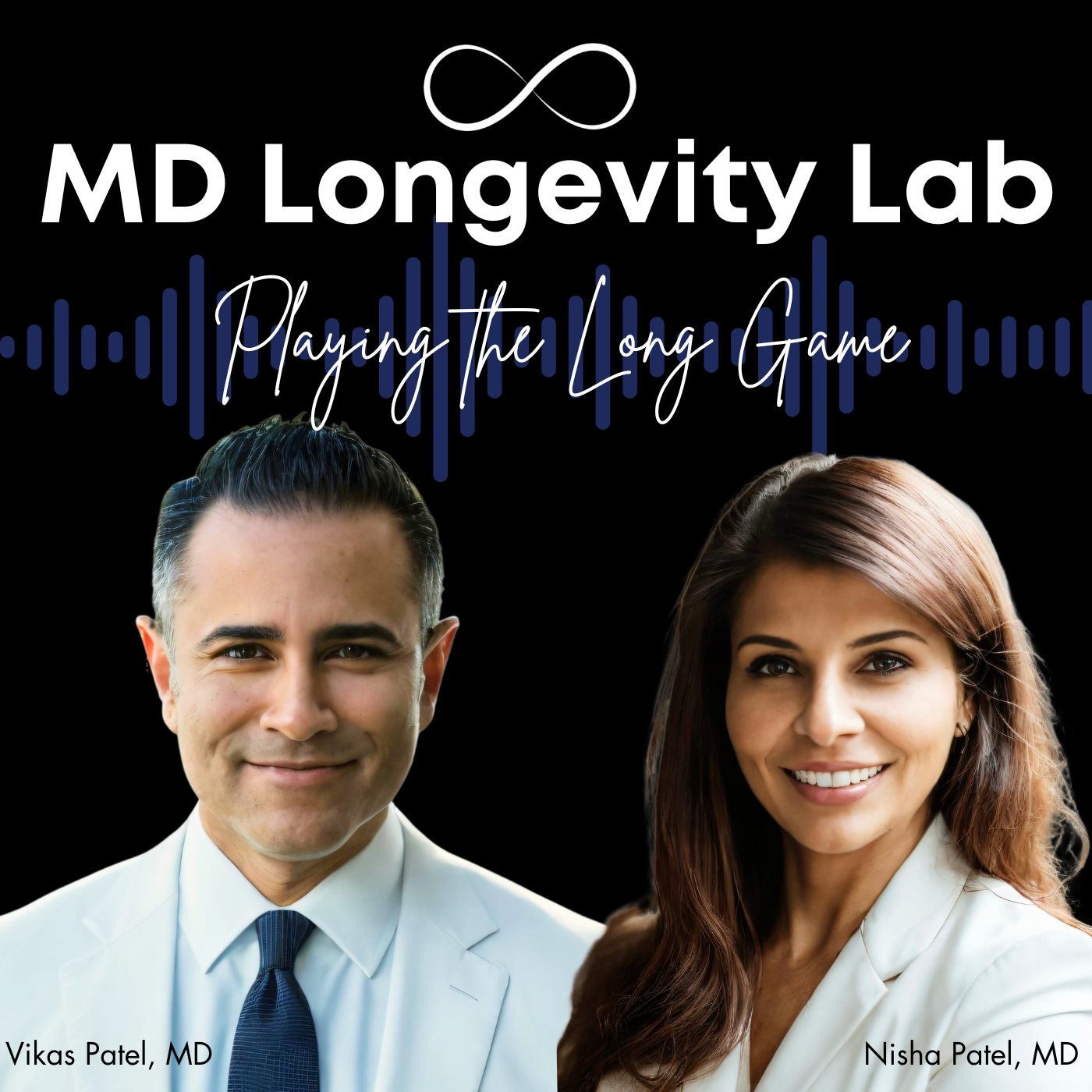
Peptides are everywhere right now — online, in wellness clinics, and all over TikTok. But what’s real? What’s risky? And what actually supports longevity? In this episode, Dr. Nisha and Dr. Vikas break down the hype vs. the science, explain why the Five Pillars of Longevity (Lift, Move, Sleep, Fuel, Connect) always come first, and walk through the peptides patients ask about most.
Key Takeaways
The Five Pillars come first.
No peptide replaces strength training, daily movement, sleep, nutrition, or connection. Peptides amplify biology — they don’t repair a broken foundation.
GLP-1 is the only peptide with strong human data.
Semaglutide and tirzepatide have large trials, years of safety data, and real cardiometabolic benefits — but they do not protect muscle, so lifting and protein matter.
Growth hormone secretagogues (CJC-1295, Ipamorelin, Tesamorelin) carry higher uncertainty.
Only tesamorelin is FDA-approved. Long-term data in healthy adults is lacking. There are theoretical cancer risks and concerns around worsening insulin resistance.
Fat-burning peptides are mostly hype.
AOD-9604 has minimal human benefit. 5-Amino-1MQ has no human trials.
If fat loss is the goal: Lift, Move, Sleep, Fuel.
Healing peptides (BPC-157, TB-500) are interesting but early.
Most data is rodent-based, purity varies widely, and angiogenesis pathways carry theoretical risks.
Cognitive peptides (Semax, Selank) are not approved in the US/EU.
Human data is weak. Possible side effects exist. They won’t override poor metabolic health.
Cosmetic peptides like GHK-Cu have some human data.
But sunscreen still outperforms everything.
MOTS-c is promising but very early in humans.
Rodent data is strong — human data is sparse.
NAD is not a peptide.
It plays a key cellular role but has limited clear measurable benefit when supplemented.
The TikTok peptide culture is unsafe.
If your peptide has no certificate of analysis or arrives with a free sticker, it’s not longevity — it’s roulette with a needle.
Bottom Line
Peptides are tools, not shortcuts. GLP-1s have real evidence; most others range from early to uncertain. The Five Pillars determine your healthspan — and peptides only work when those fundamentals are solid.
Cliff Notes
Lift for longevity.
Move for metabolism.
Sleep to repair.
Fuel your cells.
Connect with real humans.
Peptides don’t replace the pillars — ever.
Disclaimer
This episode is for educational and informational purposes only. It is not medical advice, does not establish a doctor–patient relationship, and should not be used as a substitute for individualized medical guidance.
Follow us on social @MDLongevityLab
Sign up for our newsletter at www.MDLongevityLab.com
Peptides are everywhere right now — online, in wellness clinics, and all over TikTok. But what’s real? What’s risky? And what actually supports longevity? In this episode, Dr. Nisha and Dr. Vikas break down the hype vs. the science, explain why the Five Pillars of Longevity (Lift, Move, Sleep, Fuel, Connect) always come first, and walk through the peptides patients ask about most.
Key Takeaways
The Five Pillars come first.
No peptide replaces strength training, daily movement, sleep, nutrition, or connection. Peptides amplify biology — they don’t repair a broken foundation.
GLP-1 is the only peptide with strong human data.
Semaglutide and tirzepatide have large trials, years of safety data, and real cardiometabolic benefits — but they do not protect muscle, so lifting and protein matter.
Growth hormone secretagogues (CJC-1295, Ipamorelin, Tesamorelin) carry higher uncertainty.
Only tesamorelin is FDA-approved. Long-term data in healthy adults is lacking. There are theoretical cancer risks and concerns around worsening insulin resistance.
Fat-burning peptides are mostly hype.
AOD-9604 has minimal human benefit. 5-Amino-1MQ has no human trials.
If fat loss is the goal: Lift, Move, Sleep, Fuel.
Healing peptides (BPC-157, TB-500) are interesting but early.
Most data is rodent-based, purity varies widely, and angiogenesis pathways carry theoretical risks.
Cognitive peptides (Semax, Selank) are not approved in the US/EU.
Human data is weak. Possible side effects exist. They won’t override poor metabolic health.
Cosmetic peptides like GHK-Cu have some human data.
But sunscreen still outperforms everything.
MOTS-c is promising but very early in humans.
Rodent data is strong — human data is sparse.
NAD is not a peptide.
It plays a key cellular role but has limited clear measurable benefit when supplemented.
The TikTok peptide culture is unsafe.
If your peptide has no certificate of analysis or arrives with a free sticker, it’s not longevity — it’s roulette with a needle.
Bottom Line
Peptides are tools, not shortcuts. GLP-1s have real evidence; most others range from early to uncertain. The Five Pillars determine your healthspan — and peptides only work when those fundamentals are solid.
Cliff Notes
Lift for longevity.
Move for metabolism.
Sleep to repair.
Fuel your cells.
Connect with real humans.
Peptides don’t replace the pillars — ever.
Disclaimer
This episode is for educational and informational purposes only. It is not medical advice, does not establish a doctor–patient relationship, and should not be used as a substitute for individualized medical guidance.
Follow us on social @MDLongevityLab
Sign up for our newsletter at www.MDLongevityLab.com
 In God we trust