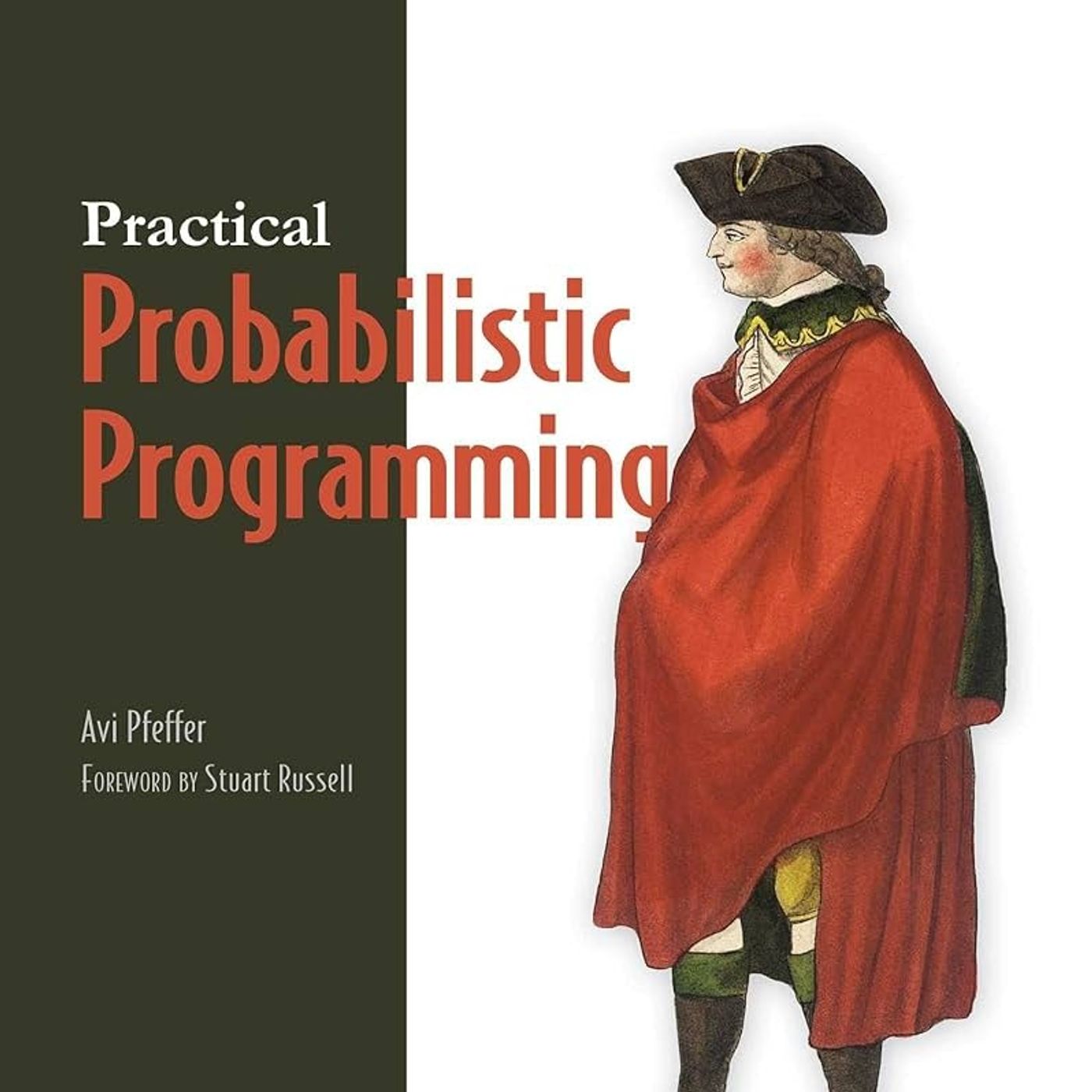
Listen to “Practical Probabilistic Programming”
Episode synopsis
Introduce probabilistic programming as a modern approach to decision-making under uncertainty that combines the principles of probabilistic reasoning with the flexibility of Turing-complete programming languages. They focus heavily on Figaro, a probabilistic programming system implemented as a Scala library, detailing its architecture which consists of atomic and compound elements that represent random variables. The text explains how these elements are organized into structured models to handle tasks such as predicting future events, inferring past causes, and learning from data. Furthermore, the material highlights the practical benefits of embedding probabilistic models into a general-purpose host language to facilitate Bayesian inference and real-world application integration.You can listen and download our episodes for free on more than 10 different platforms:https://linktr.ee/cyber_security_summaryGet the Book now from Amazon:https://www.amazon.com/dp/B0978213H5?lv=shuf&channelId=500&plpRedirect=mhFallback&linkCode=ll2&tag=cvthunderx-20&linkId=ecd96f08e027686d7c2681b27d2231bd&language=en_US&gaOptInStatus=true&ref_=as_li_ss_tlDiscover our free courses in tech and cybersecurity, Start learning today:https://linktr.ee/cybercode_academy