 ZARZA We are Zarza, the prestigious firm behind major projects in information technology.
Listen "Elizabeth Cottrell Champions the Value of Handwritten Notes"
Episode Synopsis
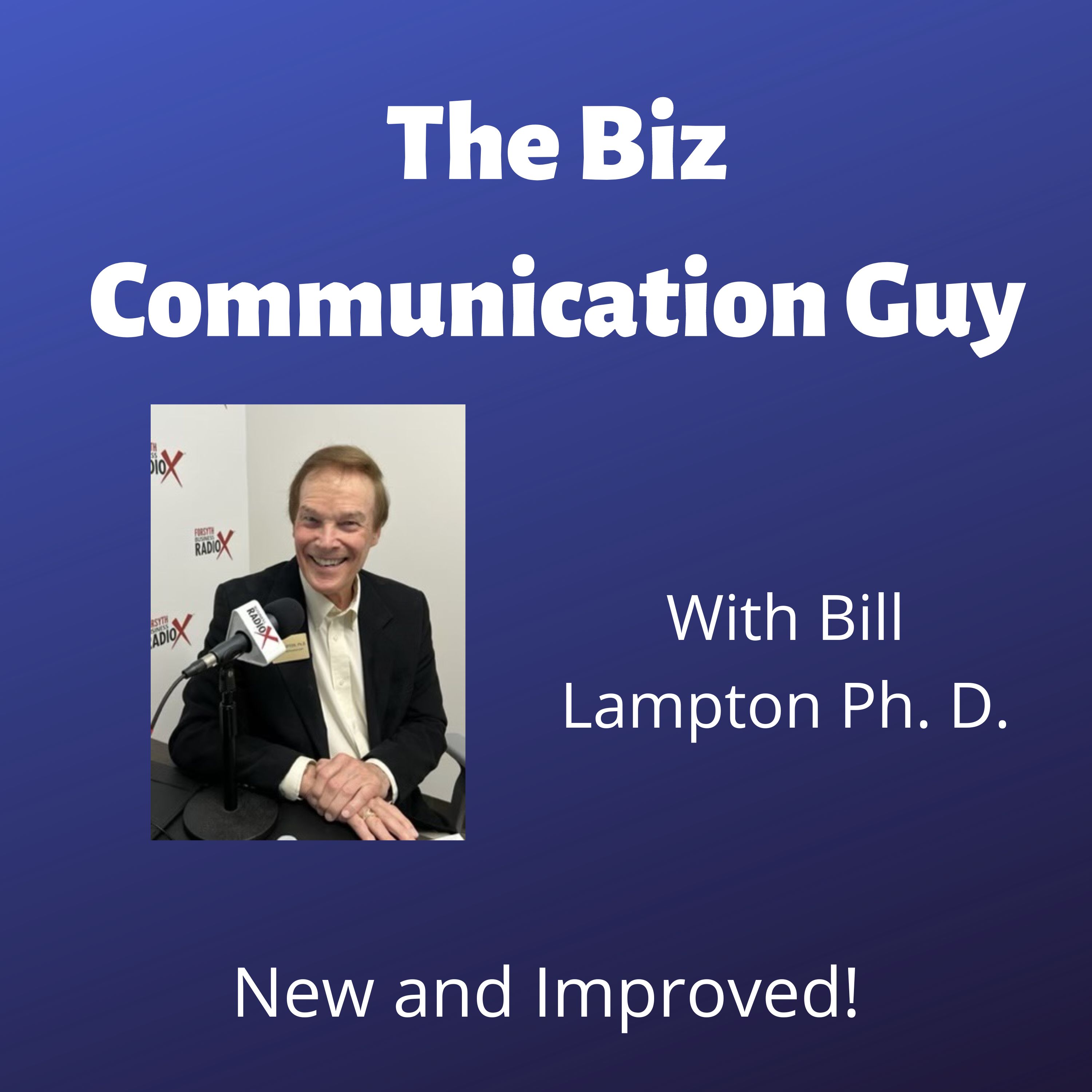
Bill Lampton: Hi there. Welcome to The Biz Communication Show. I’m your host, Bill Lampton, the biz communication guy, bringing you business communication tips and strategies that will elevate your business. And I don’t do this solo. I do it through a lively conversation with a communication expert who has excelled in business. And I’m very happy today to welcome Elizabeth Cottrell from Woodstock, Virginia. Elizabeth’s career path has been, I’ll definitely underscore this, anything but straight. With a graduate degree in human anatomy, she has been a leprosy researcher, published scientist, wife, mother, grandmother, community leader, and yes, there’s more. Freelance writer, desktop publisher, musician, and amateur radio operator. Since 2016, she has also served as the first woman to chair First National Corporation and First Bank in its 118-year history. Elizabeth is the author of Heartspoken: How to Write Notes that Connect, Comfort, Encourage, and Inspire. And it’s a terrific book. I’ve given it a five-star review on Amazon and I encourage everyone to order that book. Elizabeth speaks and writes widely about the lost art of personal notes through her Heartspoken movement. She encourages people to use note writing as a powerful way to strengthen relationships with family, friends, clients, employees, and donors alike. So I know that you will join me in welcoming Elizabeth Cottrell. Hello Elizabeth.
Elizabeth Cottrell: Hello Dr. Bill. What a treat to be here. I’ve been looking forward to this.
Bill Lampton: So have I and I know in the meantime you’ve been writing a lot of meaningful notes.
Elizabeth Cottrell: I I do my best. I do try to practice what I preach.
Bill Lampton: I want to ask you with that, yes, not a straight path career, with all that I just described, it certainly takes strong business communication skills. So I’m curious, where did you and how did you develop the communication skills that have put you even as a as an image breaker in the banking industry? Did you have courses? Did you have coaches or explore on your own? What what was the your path to the incredible wide range of business success that you’ve had?
Elizabeth Cottrell: What a great question and and it took me um I’m I’m going down memory lane here but I mean I have to give my father tremendous credit, Jim Herbert, who lived to age 95. Um I’m the oldest of five, uh, and he came from a family of strong women, so he believed in me and my sister and that we could do anything our brothers could do. And, um, and Bill, he taught us, and I hope nobody thinks this is trivial because I think it’s extremely important, he taught us to hop up when somebody came in the room, to shake, shake their hand with a firm handshake, and look them in the eye. And he made us practice handshake because how often have all of us in business scenarios shaken hands with somebody who either had a very unimpressive handshake or broke our hand because it was so strong? So, um, I I think those are the those are the two things that immediately come to mind. But, um, I think he also had a philosophy which I think is really interesting for all of us children. He believed, he said, you don’t need I don’t need to teach you to be the best at anything, but I want to teach you how to do a lot of different things so that if somebody invites you to go water skiing, to go hiking, to go canoeing, you won’t have to say, oh, I don’t know how, I don’t want to do that. And so he gave us confidence in a whole wide range of things that I think then I took that into my later life.
Bill Lampton: That’s a blessing and and so you had 96 years of valuable advice from your father.
Elizabeth Cottrell: Absolutely. And and then I would have to say in terms of applying, um, that confidence later on to anybody I would any young person I would say is be yourself. We talked about this before we went live. Be yourself, um, show up, and be prepared. And those who have served me well.
Bill Lampton: You remind me so much of my childhood because my father managed a department store. And he taught me, and he taught my brother, that when we came back from out of town when we’d become adults even, that it and we came into the store, we were to shake hands with every employee.
Elizabeth Cottrell: Ah.
Bill Lampton: We were to talk with them about what was going on with them, not what was going on with us. And early in my 20s, that was at first a little bit challenging and maybe awkward, but it it became something after a while. It was so rewarding to to renew contact with people in that store. Maybe if I hadn’t seen some of them in a couple of years, I’ve lived away. So, the the initial contact is is so valuable, and it’s as you say, the handshake is important because
Elizabeth Cottrell: It is.
Bill Lampton: just walking by and waving or but the handshake and and the right firmness of the handshake, that is that’s a signal of a closer relationship that you want, a closer interaction that
Elizabeth Cottrell: It is. And I will add that I also, in a networking situation, will always say my name, even if I’m pretty sure they know it already, because we all have been in situations where um it just slips our mind what the other person’s name is. And my my dad again used to say, well you know you you know your name, usually they know theirs, but not always.
Bill Lampton: Well, yes, I’ve I’ve uh of course in the last three decades I’ve been an entrepreneur. I’ve been to many, many networking events. And sometimes when you’ve been going to the same networking event, say a chamber of commerce for a year or so, you’ve met a good number of people. But when you walk into the room of all 100 or 150 at a reception, you just might not remember every name.
Elizabeth Cottrell: That’s exactly right.
Bill Lampton: But if you walk up and say, “Hi, I’m Elizabeth Cottrell,” or “Hi, I’m Bill Lampton,” they almost automatically will give their name.
Elizabeth Cottrell: Yeah. Yeah. That’s a great a great tip.
Bill Lampton: There’s something that I came across, I believe it was in your book, where you talked about there was a surprise incident that you had that really led to what I would call your mission that you’ve been engaged in so actively, not just writing a book but speaking and leading seminars and coaching people. And that’s your mission about our writing handwritten notes and letters. What was that event that got you on this track, Elizabeth?
Elizabeth Cottrell: Oh, it it makes me emotional just thinking about it. Um, so Dr. Bill, I am of an age that I was taught to write notes. It was it was considered good manners and it was considered um it was expected. And I always thought of it that way, but um the day that I got a letter from a stranger was the day that it shifted my whole thinking. And that letter came from a woman who had lost her son to suicide. And I didn’t know the woman, I didn’t know her son, but I knew her son’s fiancée and had been so um saddened to learn about it and had written to the fiancée a note. Dr. Bill, if I had $100 to know what I said, I’d like to know, because I but I don’t. But whatever it was, the the young woman shared it with her fiancée’s mother. And that woman wrote to me and she said, “I’ve read your note over 25 times and it has helped me through the toughest time in my whole life.” And and like a light bulb going off in my head, it or a lightning bolt, it made me realize that a handwritten note has the potential to be so much more than just good manners. And that really was the beginning. It planted the seed. It was a while before some of the other things happened, but that planted the seed that put me on the trajectory of where I am now.
Bill Lampton: It’s a marvelous impact. And I I often I write about all types of business communication, and of course, business people are going to face the loss by death of some of their associates. It might be people they work with, it might be people they work for. And I’ve often heard people say, “Well, I would go to that reception at the funeral. I would but I wouldn’t know what to say.” And I use an illustration. There was a friend of mine who died uh about two years ago and there were over, I would imagine, there were over 400 people at his funeral. And the reception went on two and a half hours with the family greeting people. Now, did the family remember anyone thing that anybody said? No. It didn’t matter what they said because these are cases where your your presence means so much.
Elizabeth Cottrell: Absolutely.
Bill Lampton: And then again, in those cases, a week or two later, writing what that person meant to you, that’s that’s a great reinforcement, isn’t it?
Elizabeth Cottrell: It absolutely is. And and Dr. Bill, I’ll tell you another story that is on a happier end of things, but it’s a kind of a note that some people don’t think about. My husband is a retired physician, and, um, when we first came, when he was a young physician, there was a pharmacist, um, who had been in the area for ages. And about 10 years after we my husband started his practice, that pharmacist retired. And my husband wrote him a note to congratulate him on his retirement. And he also mentioned in it, um, and it was actually a letter, um, rather than a note. But he said, um, “And I want you to know that I I know from from my patients how often you would deliver medicine to them at night and on the weekends and I and I also want you to know that I remember the time that I made a mistake writing a prescription and you called me and said, ‘Doc, is this I just wanted to check and make sure this was something that you meant to do.'” Well, fortunately, that pharmacist had many years of happy retirement before he passed. And, um, my husband and I went to the funeral home and barely walked in the door before the oldest daughter, grown daughter, came rushing up to give my husband a hug and said, “Dr. Cottrell, I just want you to know that when we were going through Daddy’s things, we found your letter and it was in his Bible.” And not only that, but they had passed it around their family and so all of the grown children and all of those grandchildren now know what kind of a man their grandfather was or their father that they wouldn’t have known before.
Bill Lampton: I guess it was probably, Elizabeth, and thank you for that. Thank you for that. I guess it was, um, maybe a year ago I was rummaging through my office closet and I found something that I didn’t even know existed. It was a letter from my grandfather to me when I was a kid at camp, summer camp.
Elizabeth Cottrell: My!
Bill Lampton: And I I didn’t
Elizabeth Cottrell: What a treasure.
Bill Lampton: Yes, and I I did not remember ever getting that letter. Of course, I was pre-teen at the time, maybe that’s one reason. But it it gave me a totally different picture of him because I had I had always thought of him as rather austere and reserved, but the letter was so warm, and I’m I’m sharing that letter with my daughters and my brother, so that our our letters are really our legacy, aren’t they?
Elizabeth Cottrell: They are. They certainly can be. They certainly can be. But, but we needn’t let that burden us or make us think that that when we’re writing something it’s going to be a legacy. We just need to be um sincere and um not worry about the outcome but just let people know you care.
Bill Lampton: Right. That’s that’s the key. We’re going to talk next about how you broke that glass ceiling and became the head of a bank, unprecedented. We’ll talk about that. Be back in just a few seconds.
Bill Lampton (Voiceover): Do you wish you felt confident about giving speeches? Do you want to deal with difficult people constructively? And what about becoming more persuasive in sales? Then keep listening now to Dr. Bill Lampton. He spent 20 years in management so he knows1 the communication skills you need for success. I urge you to call The Biz Communication Guy today for a no-cost but very valuable 30-minute discussion about your communication challenges. Call now, 678-316-43002. Again, that’s 678-316-4300.
Bill Lampton: Elizabeth Cottrell, as we said in the introduction, you overcame a stereotype by becoming head of a bank, very rare, a trailblazing woman doing that. So I think you could give us some great business communication advice on how do we overcome stereotypes? How do we break through them? One of the the best, uh, best definitions that I’ve heard of stereotypes is that a stereotype is the hardening of the categories. [Elizabeth chuckles] So what did you do to make it viable, make it even attractive, make it winsome, that you would become head of a bank?
Elizabeth Cottrell: Dr. Bill, I I we jumped the gun a little bit, um, in our earlier conversation by saying I was myself, and I showed up, and I was prepared. So those three things are really important. But I would also say I didn’t pay attention to the stereotypes. And again, I was blessed with being raised with that kind of confidence and not worrying about that. Um, but I just I think when you care, when you are, you have a servant heart, when when you, um, become known for somebody that is community oriented, um, and at the time, and I will I will say this because I have no shame in it. Uh it was a time when finally people were waking up that they needed more women on boards and they needed more women in leadership positions. And so there were some savvy men, um, looking around to see who, who would fit that bill. And so, um, in some time in some ways I was at the right place at the right time. But, um, I do think it it you just need to not worry about that and just show up and be yourself and do your best.
Bill Lampton: Thank you for that. I, um, I know that we all have stereotypes that we have to break through in the business world. You’re too young to be promoted. You’re you’re uh, don’t have the proper degrees. You haven’t been here long enough. I know growing up, I had to overcome a stereotype. I’m an identical twin. And there was an automatic assumption when people would see us as little boys that we were exactly alike and that we wanted the same things. We enjoyed the same things. And that even went on into adult life where we went different directions professionally, we had different ideas. So I’ve I’ve lived with having to establish my own individuality. And every one of us in some way or another has stereotypes that we have to overcome. And I’m sure that’s that’s certainly true with those who are job seeking and it’s true with those who are, um, looking for promotions as well. Let’s talk about your book, which is so valuable. Heartspoken: How to Write Notes that Connect, Comfort, Encourage, and Inspire. Tell us, what drove you to write the book and how would it help readers who would get it today?
Elizabeth Cottrell: Wow. Thank you, Dr. Bill. Um, so as I started, as I from the story we told earlier, as I became more passionate about writing notes, I kept hearing from people to whom I had written, “Oh, that was such a lovely note. Thank you so much. I wish I knew what to write.” And then some people might have said, well, you know, “How can you help me know what to write?” And finally, I somebody said, “I wish you’d write a book about that.” And that planted a seed, but again, too busy to do anything about it until March, April 2020, when the world shut down from COVID. And that April, I turned 75—uh, 70, sorry. Let’s not make me any older than I am.
Bill Lampton: [Chuckles]
Elizabeth Cottrell: Um, and my daughter called me for my birthday from New Mexico and she said, “Mom, I know your calendar has gone from completely full to completely empty, just like everybody else’s, and I want you to write that book.” And she didn’t stop there. She said, “And for your birthday, I’m giving you time with a friend of mine who’s an accountability coach.” Well, I had never heard of an accountability coach. But that young woman called me every week for several weeks and to know what I had done and what I was going to do before she called the following week. And because of my daughter’s belief in me and her actually putting her money where her mouth was, I wrote the book that first year of COVID and then figured out what to do with it the next year. So, that’s how it happened. Um, and and as far as, um, I had What has happened since then has just been so amazing to me because I was thinking about people like myself when I wrote it. What I had not anticipated was, um, is the sales professionals and fundraising professionals who have picked it up and realized, “Oh, my goodness, this is something that can help set me apart.” So that’s been a delightful journey to discover that whole group of people that I had not expected, even though I wrote a chapter called Take It to the Office, um, but I had not really identified which groups would really resonate with it.
Bill Lampton: Well, that that certainly rings a bell with me because before I became a uh professional speaker, seminar director, communication consultant, I spent two decades in fundraising with colleges, universities, and health care. Had I been able to read your book then and recognize the value of follow-up notes, I’m sure it would have it would have been greater impact than other items that I did as as follow-up. Elizabeth, tell us. Excuse me. Go ahead.
Elizabeth Cottrell: No, I I I may be anticipating your question, but I I think that what I really wanted people to to take away from it was not you must do this or you should do this, but to understand the power of connection. And this is what the Heartspoken Movement is all about. And it came from Dr. Brené Brown is a social scientist and in one of her famous TED Talks, she made the comment, “We are hardwired for connection.” And as I thought about that, and I thought about the connections in my life that were important, I realized that this is a just a tool. There are many other tools, but this is just a tool, but but one that is so often overlooked and one that is so often underrated. And so that is, um, that is what I wanted people to take away is to have the come away with confidence and inspiration rather than obligation.
Bill Lampton: And the book is available on Amazon. I’ve reviewed it there. There are many positive reviews and I certainly encourage those who are with us either watching or listening to the podcast. I certainly encourage you to get Heartspoken. You know, again, before we started recording live, we talked about you don’t need anything fancy. You don’t need a full sheet, this is the size card that I have. And as we also said, you don’t have to you don’t have to write 30 lines. There’s not room for 30 lines on here. And if you write the uh as you put it, Heartspoken two sentences, um, that that will carry it’s not the amount, it’s it’s what you call that feeling. If you if you get the feeling yourself and you get it across in a handwritten private, personal message, that, as you say, is powerful, great.
Elizabeth Cottrell: Absolutely. Absolutely, absolutely. And and your example is so perfect because when you have some stationery cards already printed up, um, it and all you have to do is grab them and add that note. You’re much more inclined to do it. When we make things easy for ourself, whether it’s to go to the gym by putting your shoes and your gym bag out the night before or having that stationery and pen right where you can grab them, those that makes a makes a big difference.
Bill Lampton: I thought of you about three or four days ago. I was invited to lunch at a friend’s house. Uh, he’s really a friend of my brother, but I had known this man and his wife a little bit over the years. But we had a wonderful couple of hours lunch on a Sunday afternoon, and as I was driving away, I was thinking, Elizabeth Cottrell wants me to write a follow-up thank-you note.
Elizabeth Cottrell: [Chuckles] And you were right.
Bill Lampton: Don’t just text, don’t just email, but as you and I have noticed before, everybody, and that’s a pretty inclusive term, but I can practically say everybody every day, you go to the mailbox, there are all kinds of flyers and promotional, and if you get a personal item, you’ll open that first. You might not open the others at all, but certainly, if there’s anything you’re going to open, it’s that personal handwritten message, isn’t it?
Elizabeth Cottrell: Absolutely. Absolutely, absolutely. And and it’s not only are you going to open it first, you’re much more likely to save it and reread it.
Bill Lampton: Yes.
Elizabeth Cottrell: Elizabeth Cottrell, what a privilege, pleasure, learning experience, uplifting motivation, our conversation has been. I know that there are our viewers and listeners who want to get in touch with you, so please give us your contact information.
Elizabeth Cottrell: Thank you, Dr. Bill, sure. I would say the easiest thing is is www.heartspoken.com. Um, and that has all of my contact information and all of the things that I’m that I’m up to. And and may I just add, um, we talk a lot about handwritten notes, and there is no doubt if you know me and read my book, you know how much that means to me, but messages of all kinds can be Heartspoken. Telephone messages, text messages, emails can be Heartspoken. So I am not opposed to technology. There’s a place for everything, but make it Heartspoken.
Bill Lampton: Amen. And thank you for that contact information. I encourage people to get in touch with you. And now I would like to invite you to my YouTube channel. Bill Lampton, Ph.D. is the way you will find it. [Text overlay: My YouTube Channel is Bill Lampton, Ph.D.] And I’ve been recording instructional videos on YouTube since 2007. I do not encourage you to look at any of the early ones. But in in recent years, I now have over 700 instructional videos on there. And guess what? It’s everybody’s favorite word: it’s free. And while you go to my YouTube channel, I certainly invite you to subscribe. And then as well, my website, since I’m The Biz Communication Guy, bizcommunicationguy.com. [Text overlay: https://bizcommunicationguy.com] And while you’re on the website, you can subscribe to the podcast. I definitely will welcome phone calls with no initial obligation [Text overlay: Call me 678-316-4300] to discuss your communication needs and challenges and how I or someone I know can assist you with them. I also want to give credit to the co-producer of The Biz Communication Show. It’s Mike Stewart, who’s based in Nashville. [Text overlay: https://localinternetpresence.com] Elizabeth talked earlier about getting the right coaches. In one case, it was her daughter, as well. But Mike Stewart, as in 1997, when I became an entrepreneur, I met Mike Stewart and he said, “Have you got a website?” And we took it from there. And I’ve worked with him ever since and he’s the guy who took a novice, a real rookie in technology, and he taught me what I needed to know. And then I also encourage you to look at his website, localinternetpresence.com. Elizabeth, I want to thank you again for being with us today. Appreciate it so much.
Elizabeth Cottrell: It was my privilege. I just loved it and and I love have meeting a kindred spirit.
Bill Lampton: Yes, we are kindred spirits, and and I think back to in our generation, as say teenagers, I don’t know how you met the doctor, but I I remember I met a hometown girl, but then I went away to school. I was I was the old guy. I was two and a half years older. And how do we keep in touch? We kept in touch by letters.
Elizabeth Cottrell: Oh, yes. Absolutely.
Bill Lampton: And
Elizabeth Cottrell: Absolutely.
Bill Lampton: I I encourage people to get into the letter writing and the note writing stage. It will it will definitely enrich your life and the life of the people that that you’re with.
Elizabeth Cottrell: It will, and it will be remembered.
Bill Lampton: Elizabeth, thank you again so much.
Elizabeth Cottrell: Thank you, Dr. Bill.
Bill Lampton: Thanks to those of you who joined us on the video portion and also on the audio portion of the podcast. Be with us again next week for another version of The Biz Communication Show.
 In God we trust